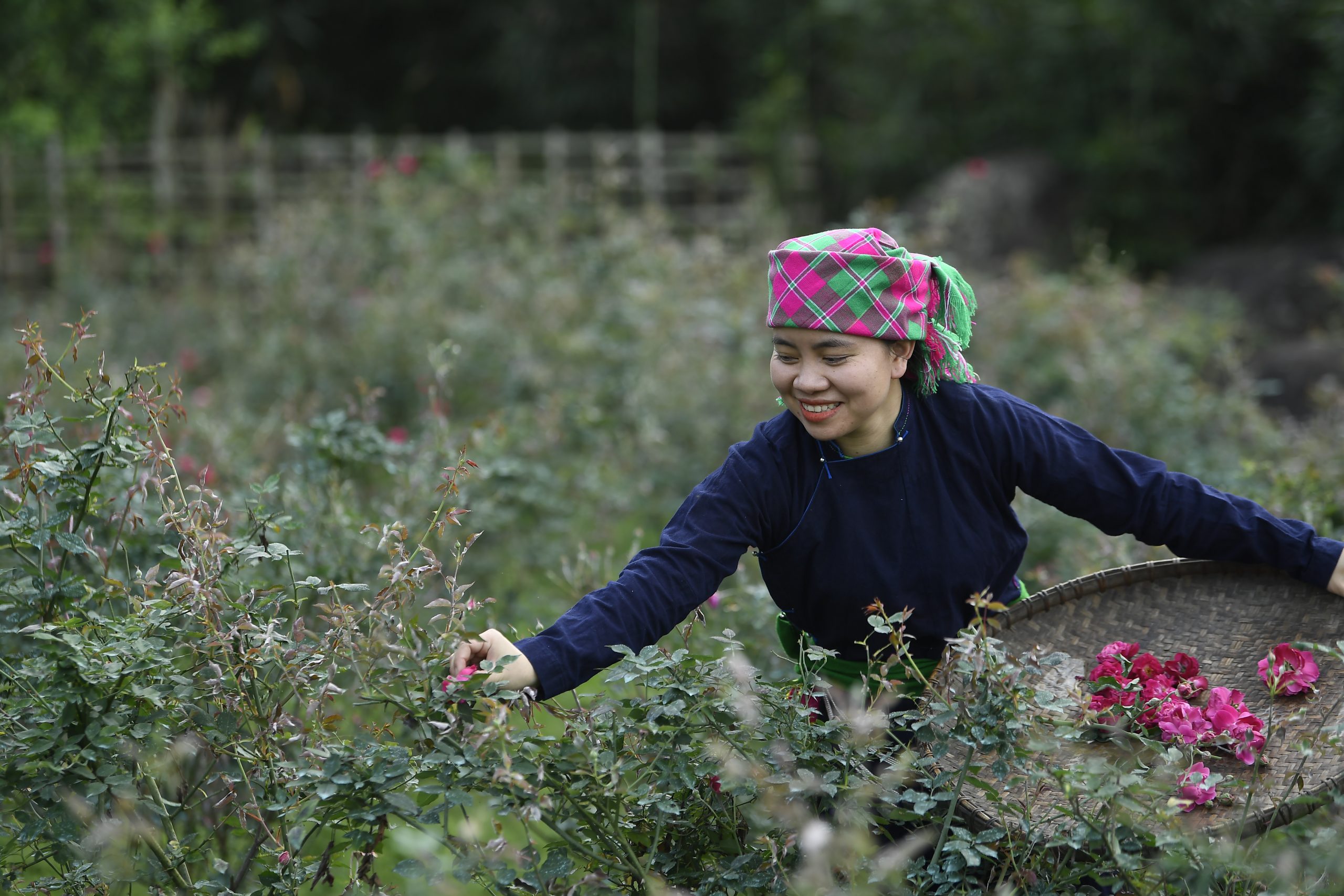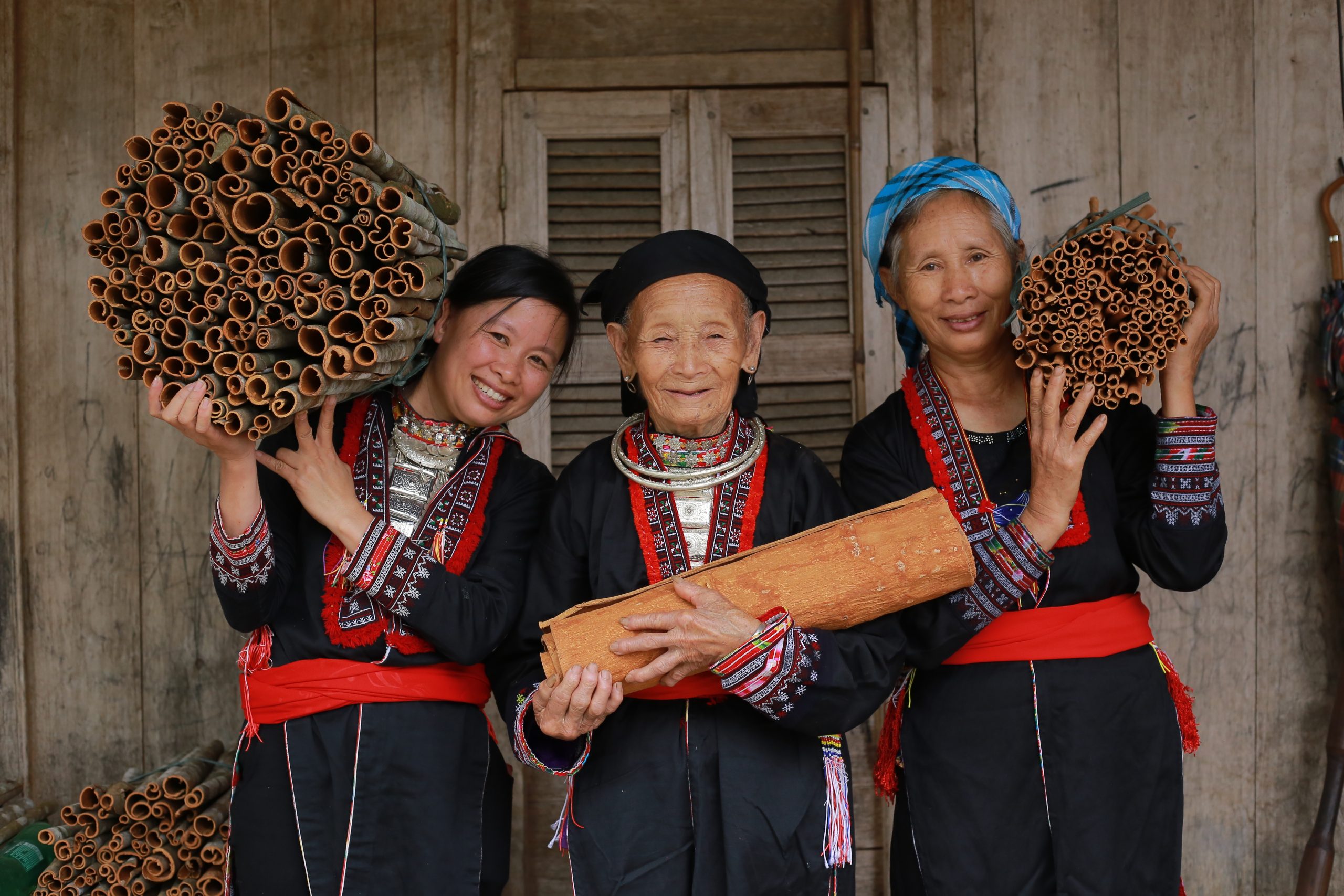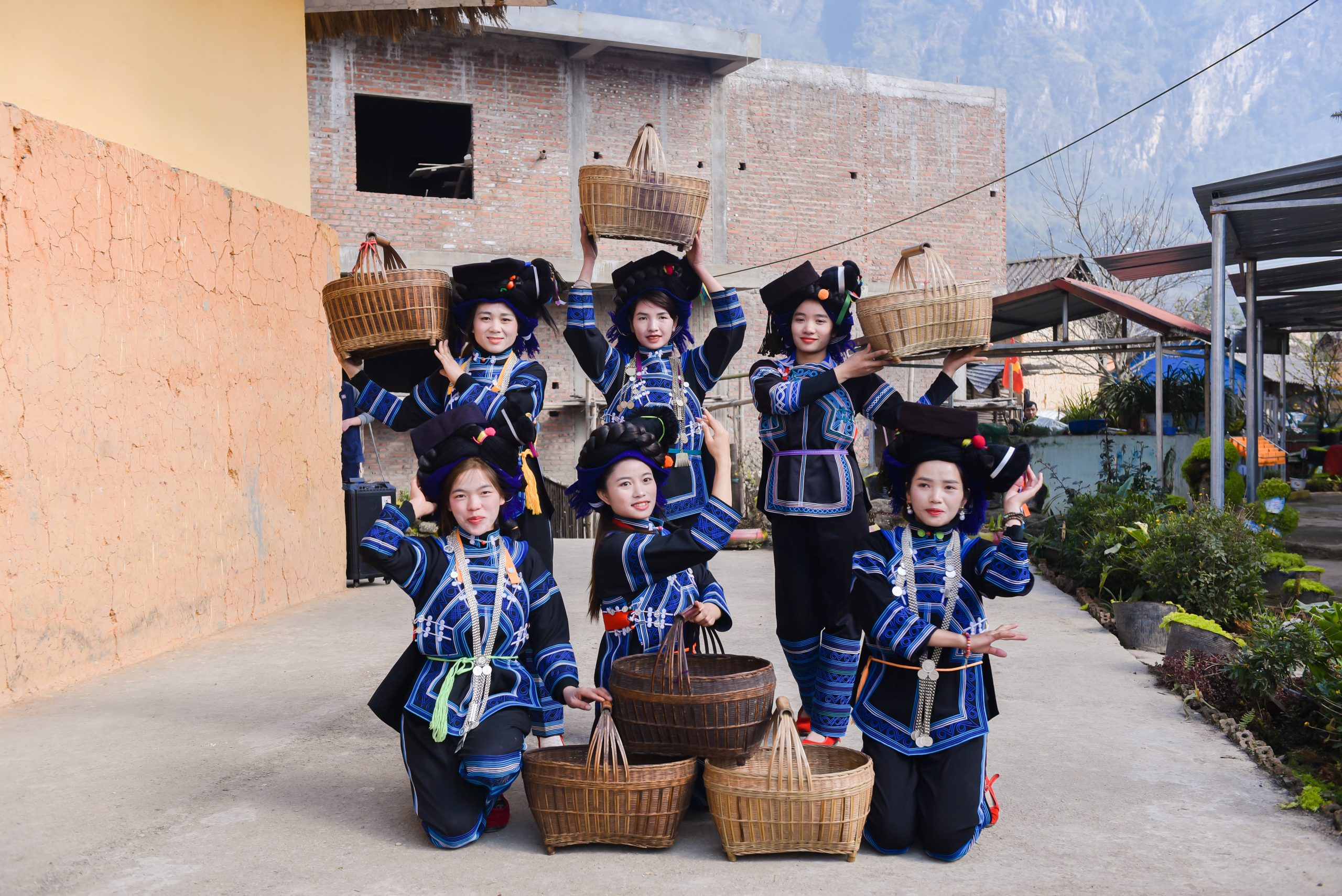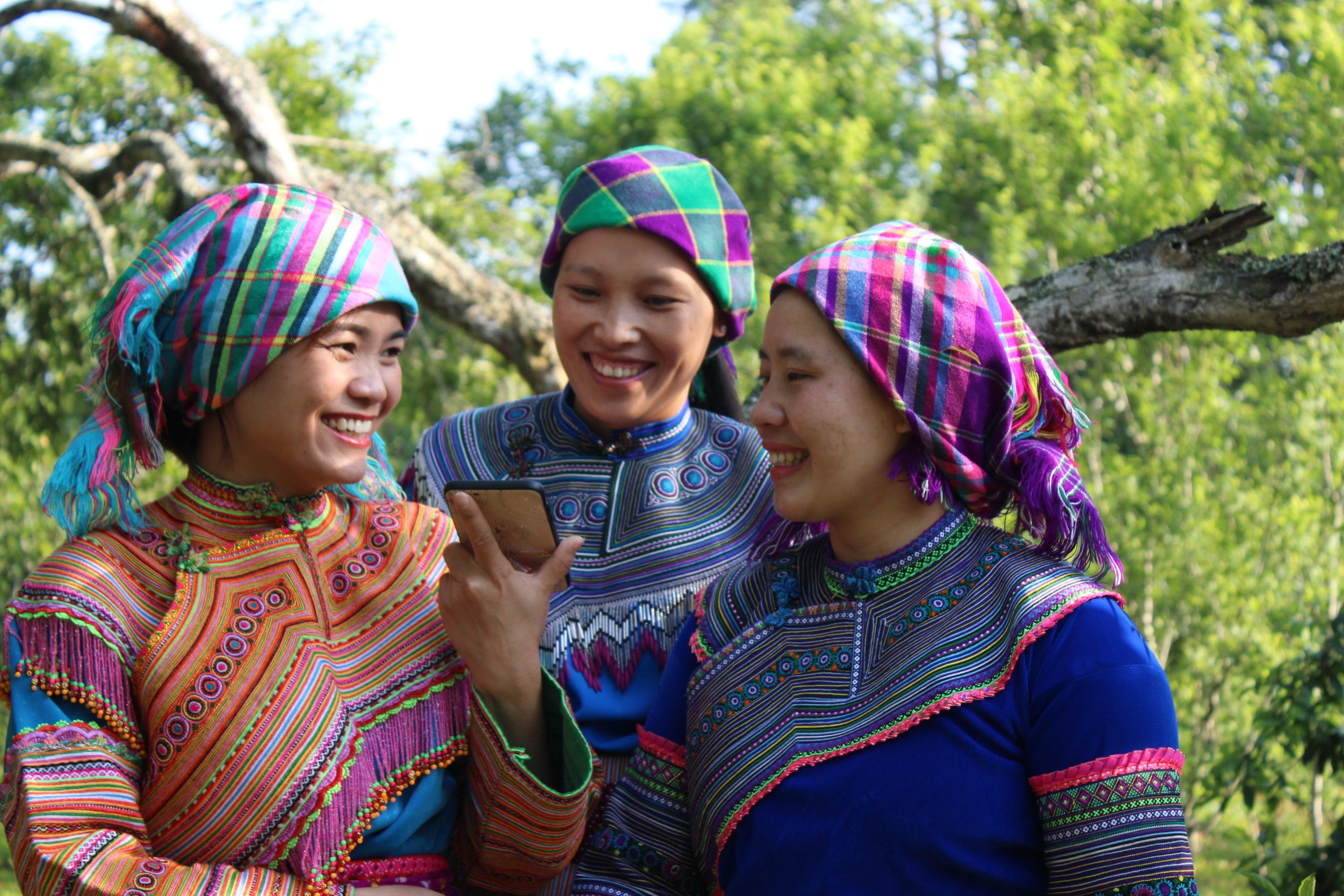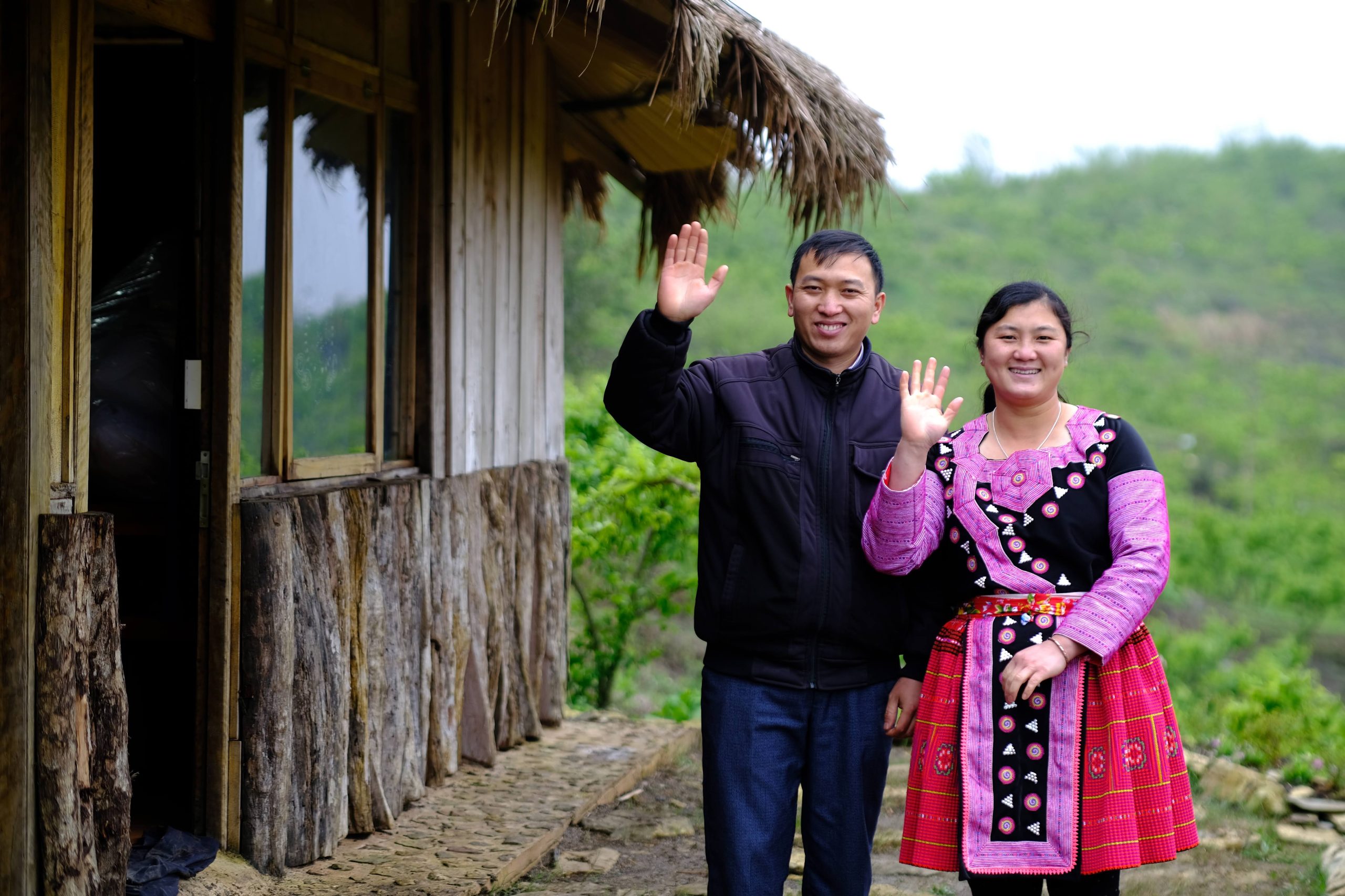
The journey to inclusive finance in Vietnam’s mountainous northwestern region is not an easy one, but it is one that the GREAT program is deliberately undertaking in order to help build the pathway for ethnic minority women to be financially connected. For decades, the lack the know-how to navigate the myriad of procedural requirements to access loans, the distance to banking institutions, the language barriers and lack of self-confidence to engage with banks, as well as the business acumen to effectively service loans have prevented ethnic minority women from obtaining the capital needed to establish and expand their businesses.
The journey is a long one with many market functions that need to operate smoothly for ethnic minority women to tangibly benefit: banking infrastructure and resourcing, an enabling financial lending policy environment, suitable and accessible financial products such as affordable loans and savings, effective outreach and marketing, and importantly, skills and capacity of the ethnic minority women themselves. Using a market systems development (MSD) approach, GREAT is working with financial institutions and support partners to address all these elements, but especially in boosting women’s skills in financial literacy.
Making it add up with financial literacy
Building ethnic minority women’s financial literacy, particularly in loan management, saving, budgeting (income-expense management), business planning and using digital channels for business, in order for women to make better financial decisions is a core objective of GREAT’s Access to Finance project. Even when banks have capital to lend, ethnic minority women face a trifecta of barriers: high collateral requirements, complex bureaucratic processes, and significant gaps in financial literacy. Without the skills to budget, save, or understand loan terms, many women rely on informal, high-interest credit or remain trapped in low-productivity subsistence farming.
GREAT’s strategy recognises that simply providing money is not enough. To create lasting change, the program must improve the financial choices and uptake of products that are responsive to women’s specific needs, while simultaneously building their capacity to manage those resources effectively. But direct delivery of financial literacy is rarely sustainable, especially once the program has finished.
Through considered market analysis of the most effective market players for long term service delivery, GREAT identified the Vietnam Women’s Union (WU) as holding an influential and practical role as on-going bank partners and service providers of financial literacy. As a representative body of women’s interests, carrying the authoritative weight of government and with extensive established systems for outreach and localisation, the Women’s Union is a critical market actor making financial services accessible for women and advancing women’s economic rights. Harnessing the WU’s networks to reach down to the smallest village and neighbourhood levels, GREAT is boosting the WU capacity as the natural bridge between formal financial institutions and local ethnic minority women beneficiaries.
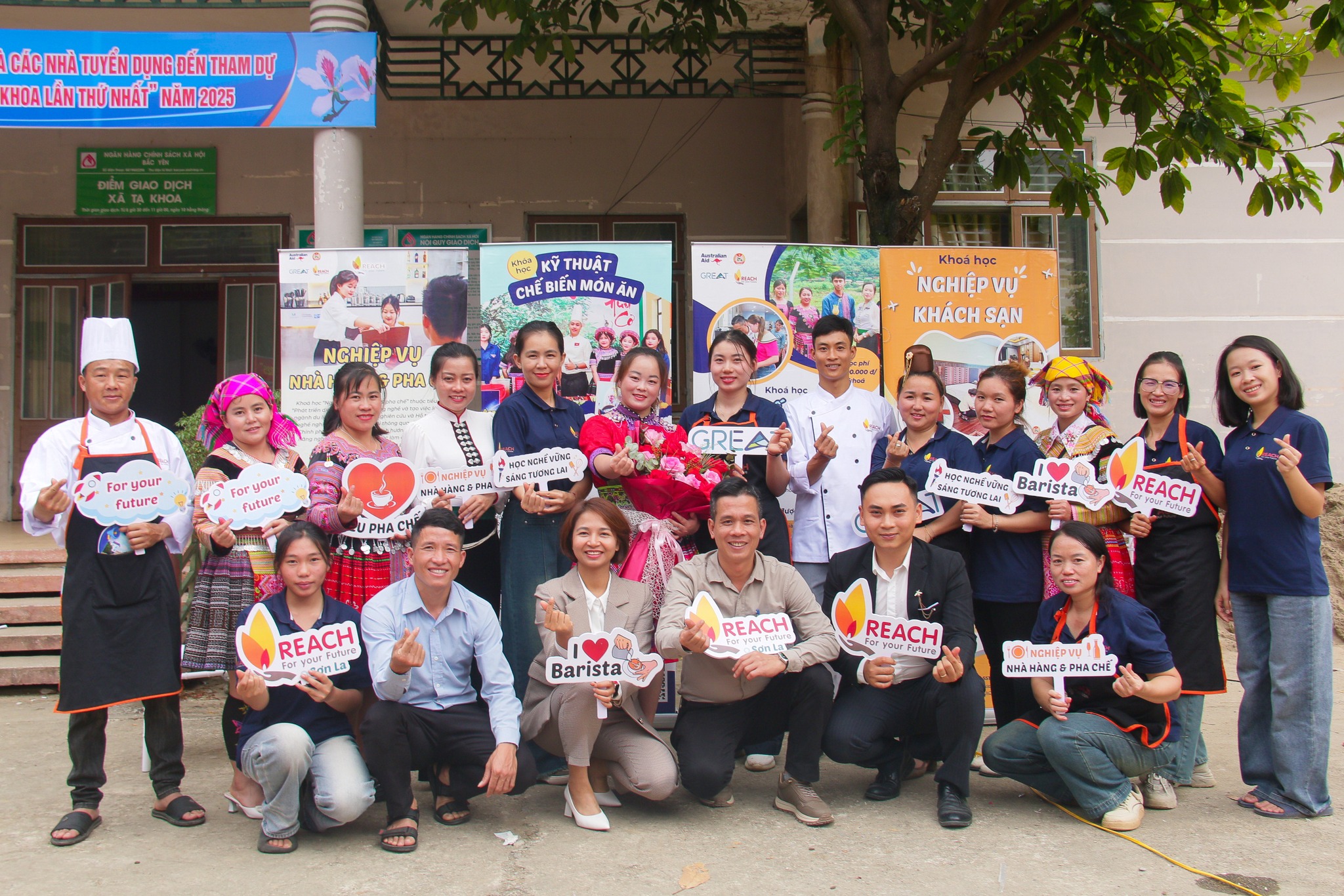
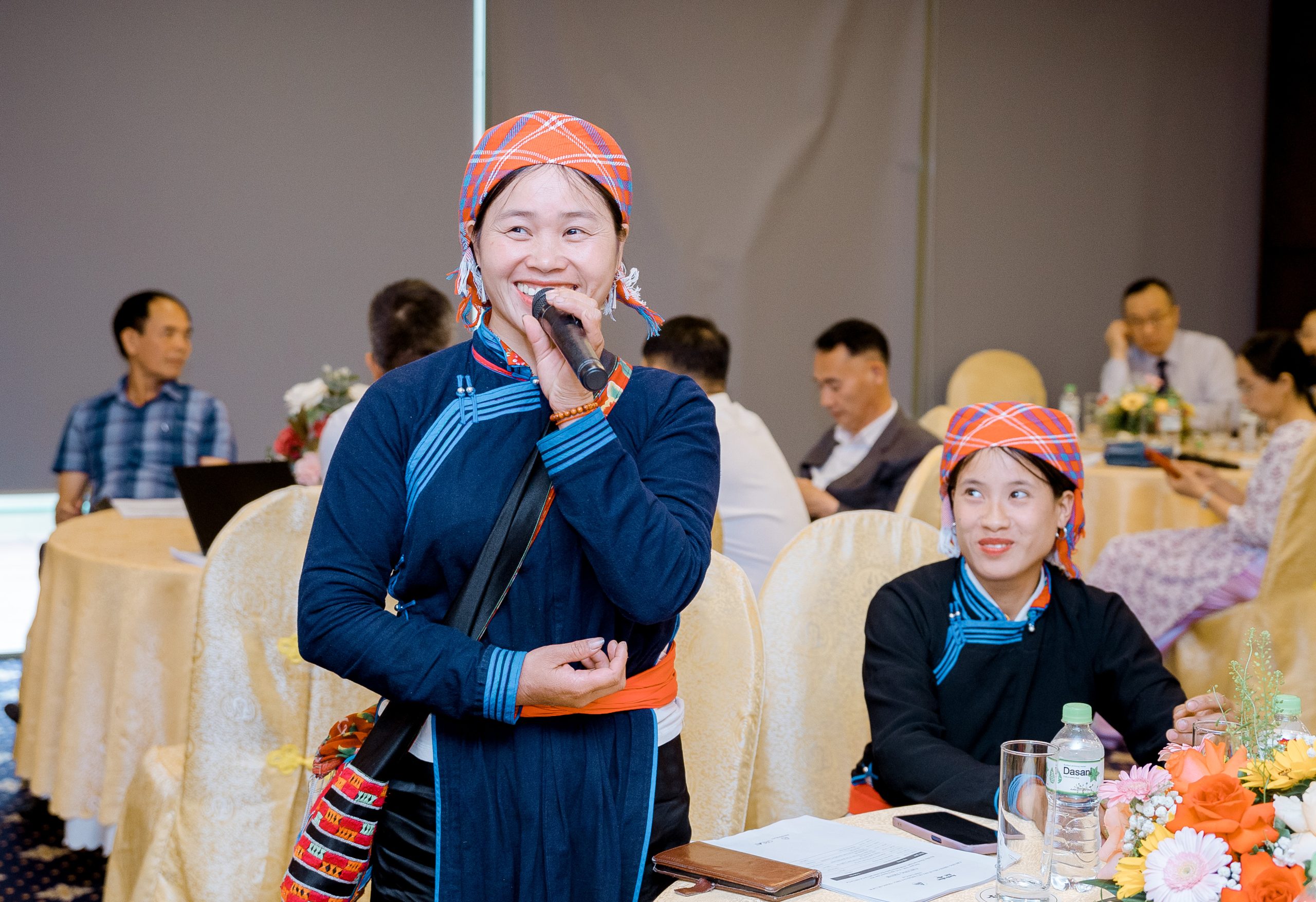
With this in mind, in 2025, GREAT implemented a comprehensive Financial Inclusion Training of Trainers (ToT) program designed empower WU officials as financial mentors. In Son La province alone, 29 master trainers from 28 communes were upskilled. These officials, many with over a decade of professional government experience, underwent intensive training to master financial inclusion concepts, interactive teaching techniques, and the use of practical examples.
The results of this “skilling up” have been immediate. Evaluation of the ToT showed measurable improvements in the trainers’ confidence and facilitation skills. These master trainers then conducted pilot sessions for women in their local communes, covering primarily Thai, Mong, Muong, and Dao communities. By investing in the WU, GREAT is ensuring that the “supply side” of financial education is sustainable, local, and culturally resonant long after the program ends.
Knowledge, attitudes, and intentions
The impact on the ground has been a measurable surge in financial agency. Before the pilot training sessions, only 17% of participants from the WU members from commune and village levels had a clear understanding of money management; after the sessions, this more than doubled to 43%. Savings knowledge jumped from 15% to 40%, and awareness of formal banking services increased significantly.
Beyond mere numbers, the shifts in attitude are profound. After the training, 87% of the WU participants recognised the necessity of daily expense tracking (up from 72% before training), and 100%—every single woman involved—requested specific guidance on developing a 12-month household financial plan. 90% of participant WU trainees significantly increased their confidence to provide financial literacy training following the train-the-trainer (TOT) training. 97% of EMW trainers claimed that that they would also apply their training to their own personal and family circumstances. This demonstrates a significant, previously untapped demand for formal financial management.
One woman, representative of many, noted that while she previously viewed a loan as a “debt burden,” she now understands it as “investment capital” that, when managed with a clear budget and savings plan, can lead to long-term economic resilience.
A sustained business environment through market systems development
By strengthening the capacity of the WU, GREAT is “nudging” the finance system toward inclusivity. Because the WU is a permanent state-social organisation, the ability to deliver financial literacy can now embedded in the local government infrastructure increasing sustainability. As women become more financially literate, they become lower-risk clients for banks. GREAT is simultaneously working with banks to develop GEDSI-responsive (Gender Equality, Disability, and Social Inclusion) loan and savings products tailored to these newly “bankable” clients.
The lessons learned from the journeys of these women and the transformed services of the banks are being translated into policy insights. These will inform national policies, specifically the development of the National Target Program on Socio-Economic Development in Mountainous Areas (NTP SEDEMA) for 2026-2030.
The GREAT program’s investment in financial literacy is more than teaching women how to save or service loans; it is about building a permanent, inclusive financial ecosystem. By empowering the WU to act as sophisticated market facilitators, GREAT is ensuring that ethnic minority women in Vietnam’s northwest are no longer low level labour contributors to the economy, but rather active, literate, and confident participants in their own financial destinies.